


Heat Pump vs AC Florida: Which System Is Right? (2026)
Heat Pump vs AC in Florida: Which System Is Right for Your Home?
If you're choosing between a heat pump vs AC in Florida, here's the short answer: for most Pinellas County homeowners, a heat pump is the better long-term value. It cools just as well as a central AC in Florida humidity, heats far more efficiently than electric strip heat during our mild winters, and qualifies for a federal tax credit up to $2,000 instead of the $600 cap on standard central AC.
That said, a traditional central AC paired with electric backup heat still makes sense in some situations, like a tight upfront budget or an existing gas furnace you plan to keep. This guide walks Florida homeowners through how each system works, what they cost to buy and to run, lifespan and maintenance, federal incentives, and the install considerations that matter most for coastal St. Petersburg, Clearwater, and surrounding Tampa Bay homes.
Heat Pump vs AC in Florida: The Quick Answer
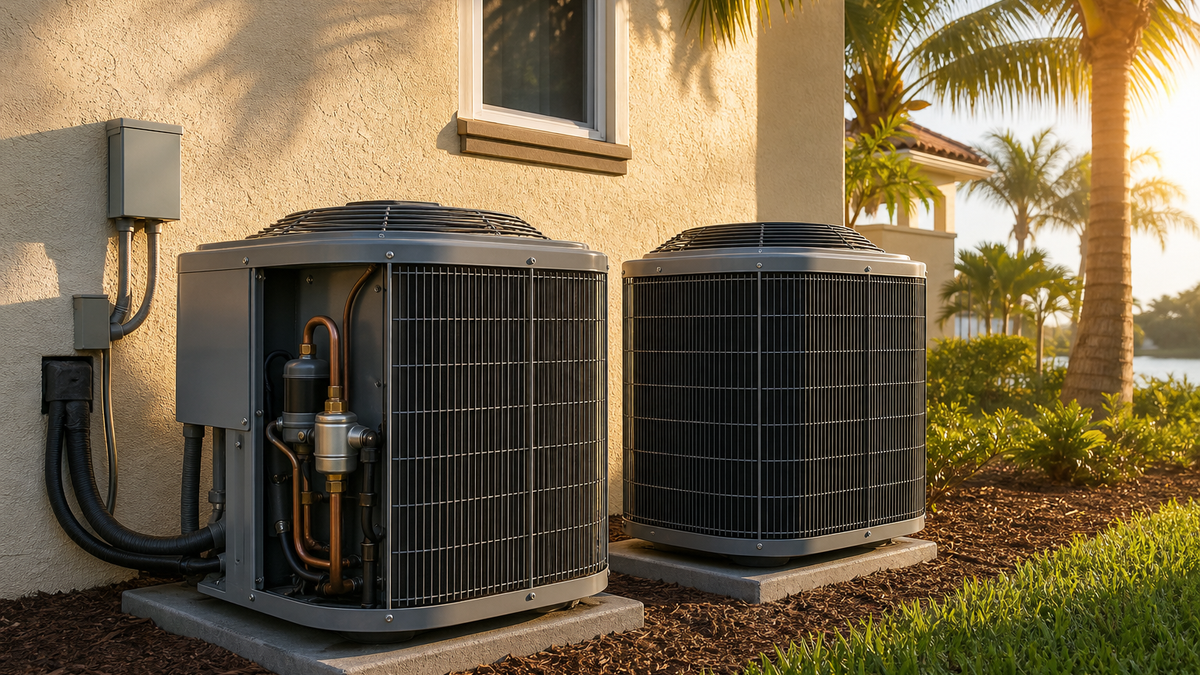
A central air conditioner cools your home and nothing else. To heat your home, it relies on either a gas furnace or, more commonly in Florida, electric resistance strip heat inside the air handler. A heat pump, by contrast, is a single outdoor unit that cools your home in summer and reverses the refrigerant cycle to heat your home in winter, all from one piece of equipment.
For Florida specifically, three things tilt the decision toward heat pumps:
- Mild winters: Heat pumps are most efficient when outdoor temperatures stay above roughly 35 to 40 degrees, which describes a typical Pinellas County winter night.
- No gas service in many homes: Most St. Petersburg homes already heat with electricity. A heat pump is far more efficient than the electric strip heat it would replace.
- Bigger federal tax credit: The 25C Energy Efficient Home Improvement Credit caps central AC at $600 but offers up to $2,000 for qualifying heat pumps, per the IRS.
The rest of this article digs into the numbers. By the end you'll have a clear sense of which side of the heat pump vs AC Florida question fits your home.
How Each System Works
Understanding how each system moves heat helps the rest of the comparison make sense. Both rely on the same core refrigerant cycle, but they're configured differently.
A central air conditioner is a one-direction system. The outdoor condenser releases heat that's been absorbed from inside your home, and the indoor evaporator coil absorbs heat from your air. When winter rolls around, the AC sits idle. Your air handler's electric strip heaters (or a separate gas furnace) take over for warmth.
A heat pump uses a component called a reversing valve to flip the direction of refrigerant flow. In cooling mode it acts identically to an AC. In heating mode it pulls heat from the outdoor air and moves it inside. Even on a cool Florida morning, there's plenty of heat energy in 50 degree air for the system to extract.
Here's how the two systems stack up at a glance:
| Component | Central AC | Heat Pump |
|---|---|---|
| Outdoor unit | Condenser only | Condenser with reversing valve |
| Indoor unit | Air handler with electric strip heat or paired furnace | Air handler with electric strip heat as backup |
| Cooling mode | Removes heat from home | Removes heat from home |
| Heating mode | Strip heat or gas furnace runs | Reversed refrigerant cycle moves outdoor heat indoors |
| Components shared | Refrigerant lines, evaporator coil, blower, ductwork | Refrigerant lines, evaporator coil, blower, ductwork |
Why Florida's Climate Favors Heat Pumps
Heat pump efficiency drops as outdoor temperatures fall, because there's less ambient heat to extract. Below roughly 30 to 35 degrees, most heat pumps automatically engage backup electric resistance heat to keep up with demand. This is the historical knock against heat pumps in northern climates.
In Pinellas County, this is rarely an issue. The St. Petersburg area sees average winter lows in the 50s, with only a handful of nights per year dipping below 40 degrees, according to NOAA climate data. That means a heat pump operates in its peak efficiency window for the vast majority of our heating hours. The few cold snaps each year may briefly trigger backup heat, but those events are short and infrequent. For Florida homeowners, the cold-weather drawback is nearly a non-issue.
Upfront Cost: Heat Pump vs AC Florida Pricing
The upfront cost gap between a heat pump and a central AC in the Florida market is smaller than most homeowners expect. Both systems share most of the same components: indoor air handler, refrigerant lines, ductwork, electrical disconnect, and pad. The heat pump just adds a reversing valve and slightly different controls.
In the Tampa Bay area, here are the typical installed cost ranges for a 2.5 to 3 ton system suitable for an average 1,500 to 2,000 square foot home:
| System Type | SEER2 Range | Typical Installed Cost |
|---|---|---|
| Central AC + electric air handler (basic) | 15 SEER2 | $5,000 - $7,500 |
| Central AC + electric air handler (mid) | 16-17 SEER2 | $7,000 - $9,500 |
| Central AC + electric air handler (high) | 18+ SEER2 | $9,000 - $11,000 |
| Heat pump + air handler (basic) | 15 SEER2 / 7.5 HSPF2 | $5,500 - $8,000 |
| Heat pump + air handler (mid) | 16-17 SEER2 / 8.0 HSPF2 | $7,500 - $10,000 |
| Heat pump + air handler (high) | 18+ SEER2 / 8.5+ HSPF2 | $9,500 - $12,000 |
Across each tier, the heat pump runs roughly $500 to $1,500 more than a comparable AC-plus-air-handler combo. That gap shrinks fast once you factor in the federal tax credit, which we cover below.
A few Florida-specific costs apply to either system:
- Mechanical permit required by Pinellas County for any new install, typically $75 to $200
- Hurricane tie-down straps to meet Florida Building Code, often $100 to $300
- Coastal corrosion package (factory coil coating, protective housing) for homes near the Gulf, often $300 to $700 extra
- Electrical upgrades if the existing disconnect or panel can't handle a higher-efficiency unit's amperage
For a fuller breakdown of what should be in your installation contract, see our AC installation checklist and our AC unit size calculator for sizing guidance.
Comparing heat pump and AC quotes? Get an honest second opinion.
Killian's Air Conditioning - Licensed (CAC1823158) & Insured
Call (727) 591-4776Operating Cost in Florida: Where Heat Pumps Win
Operating cost is where the heat pump vs AC Florida math really tilts in favor of heat pumps. The savings story has two parts: cooling costs and heating costs.
Cooling costs are essentially identical. A 16 SEER2 heat pump and a 16 SEER2 central AC use the same refrigerant cycle, the same compressor technology, and the same indoor coil. At the same efficiency rating, expect the same cooling electricity bill. There's no cooling penalty for choosing a heat pump.
Heating costs are where they diverge sharply. Electric resistance strip heat (the standard backup in most Florida air handlers) converts electricity to heat at roughly a 1:1 ratio. Every kilowatt-hour of electricity makes about 3,412 BTUs of heat. A heat pump in its operating range typically delivers 2 to 3 times that much heat per kilowatt-hour, because it's moving heat rather than creating it. This ratio is called the Coefficient of Performance, or COP.
Here's a rough annual operating cost comparison for a typical 1,800 square foot Pinellas County home, using average Florida residential electricity rates of about 14 cents per kilowatt-hour:
| Cost Category | Central AC + Strip Heat | Heat Pump |
|---|---|---|
| Annual cooling cost (May-Oct) | ~$900 - $1,100 | ~$900 - $1,100 |
| Annual heating cost (Nov-Mar) | ~$300 - $500 (strip heat) | ~$120 - $200 (heat pump mode) |
| Estimated annual total | ~$1,200 - $1,600 | ~$1,020 - $1,300 |
| Estimated annual savings | Baseline | ~$180 - $300 |
These are rough estimates that vary with home size, insulation, thermostat habits, and weather. But the pattern is consistent: heat pumps save Florida homeowners roughly $150 to $350 per year on combined heating and cooling costs versus an AC-plus-strip-heat system at the same efficiency rating.
Over a 12 to 15 year system lifespan that adds up to thousands of dollars, often more than enough to offset the small upfront premium.

Efficiency Ratings: SEER2, HSPF2, and What Matters
Two efficiency ratings drive the heat pump vs AC Florida decision: SEER2 for cooling and HSPF2 for heating. Both are required on equipment manufactured after January 2023.
SEER2 (Seasonal Energy Efficiency Ratio 2) measures cooling efficiency over a typical season. Higher numbers mean less electricity per unit of cooling. The U.S. Department of Energy minimum for split systems sold in the Southeast (including Florida) is 15 SEER2 as of 2023.
HSPF2 (Heating Seasonal Performance Factor 2) measures heat pump heating efficiency. The federal minimum for heat pumps is 7.5 HSPF2 in Region IV (the South), per the DOE.
Here's how to think about which ratings to target:
| Rating | Floor | Sweet Spot for Florida | High End |
|---|---|---|---|
| SEER2 (cooling) | 15 | 16-18 | 20+ |
| HSPF2 (heating, heat pump only) | 7.5 | 8.0-8.5 | 9.0+ |
| ENERGY STAR Most Efficient cutoff | Varies | Required for full 25C credit | Yes |
For most Florida homes, a 16 to 18 SEER2 system with 8.0 or higher HSPF2 hits the best balance of upfront cost, operating savings, and federal tax credit eligibility. Going higher than 18 SEER2 produces diminishing returns, since the incremental energy savings shrink while the equipment premium grows.
If you plan to stay in your home long-term, push toward the higher end. If you might sell within five years, the 16 SEER2 tier gives you efficiency without overspending.
Lifespan and Maintenance Differences
Florida is hard on HVAC equipment. Year-round runtime, salt air near the coast, frequent thunderstorms, and high humidity all shorten system life compared to northern climates. Both heat pumps and central ACs face the same conditions.
Expected lifespan in coastal Florida:
- Central AC: 10 to 15 years with regular maintenance
- Heat pump: 10 to 15 years with regular maintenance
Heat pumps technically log more annual runtime since they operate in heating mode too, but in Florida the AC is already running 8 to 10 months a year. The added winter runtime for a heat pump is small in comparison. Field experience and manufacturer data consistently show similar service life between the two systems in Florida.
Maintenance is nearly identical:
- Annual professional tune-up
- Filter changes every 1 to 3 months depending on the type
- Outdoor coil cleaning, especially for coastal homes
- Refrigerant level check
- Drain line clearing
- Reversing valve check (heat pump only, part of standard service)
The reversing valve is the only mechanical difference, and it's a sealed part with no special owner maintenance. A reputable HVAC company will inspect it as part of any annual visit. For a deeper look at when each system reaches the end of its useful life, see our guide on when to replace your AC unit.
Federal Tax Credits and Rebates: Heat Pumps Have a Big Edge
Federal incentives make the heat pump vs AC Florida math even more lopsided. The 25C Energy Efficient Home Improvement Credit, available through 2032 under current law, treats heat pumps and central ACs very differently.
| Equipment Type | Maximum 25C Credit | Eligibility Requirement |
|---|---|---|
| Central air conditioner | $600 | Must meet ENERGY STAR Most Efficient criteria for the year installed |
| Heat pump | $2,000 | Must meet CEE highest non-advanced tier criteria for the region |
| Combined annual cap | $3,200 across home efficiency | Includes insulation, doors, windows, audits |
That's up to a $1,400 swing in your favor for choosing a heat pump, paid back as a credit on your federal tax return. The credit is non-refundable, meaning it offsets taxes you owe but cannot exceed your tax liability for the year.
Florida utility rebates can stack on top:
- Duke Energy Florida periodically offers rebates for high-efficiency heat pumps and ACs
- Tampa Electric (TECO) runs efficiency programs for residential customers
- Florida PACE financing programs may apply for energy-efficiency upgrades
Rebate programs change frequently. Always verify current offers on your utility's website before signing a contract. Your HVAC contractor should also know which equipment models meet current rebate criteria.
The High-Efficiency Electric Home Rebate program (HEEHRA) under the Inflation Reduction Act may offer additional point-of-sale rebates of up to $8,000 for income-qualified households when fully rolled out in Florida. Implementation timelines vary by state, so confirm current availability before counting on these funds.
When AC Is Still the Right Choice in Florida
A heat pump is the better fit for most Pinellas County homes, but not every home. Here are the situations where a central AC plus electric strip heat or a paired gas furnace remains the smarter call:
- You already have a working gas furnace that's not due for replacement. Pairing a high-efficiency AC with your existing furnace avoids spending on a heat pump's heating capability you won't use.
- Your upfront budget is very tight, and the $500 to $1,500 difference matters even after the larger tax credit. (Note that the credit is paid back as a tax refund, not at point of sale, so cash flow timing matters.)
- You rarely or never run heat at all. Some Florida snowbirds and rental properties almost never use the heat function. The annual savings from a heat pump shrink to near zero in this case.
- You have natural gas service and current gas rates make a high-efficiency furnace cost-competitive with a heat pump for the limited heating you do.
- Your existing air handler is fairly new and the indoor unit doesn't need replacement. Replacing only the outdoor condenser with a like-for-like AC can sometimes make sense, though matched systems are always preferable.
If any of these apply, a quality central AC with a properly sized indoor unit is still a great choice. The decision is not heat pump or nothing.
Coastal Florida Install Considerations
Whether you go heat pump or AC, coastal Florida installs come with their own checklist. Salt air, hurricane code, and flood elevation all apply equally to both systems.
Coastal corrosion protection. Salt-laden air degrades aluminum and copper coils faster than inland conditions. Most major manufacturers offer factory-applied coatings (commonly called Sea Coast or Coastal-Guard packages) for an extra $300 to $700. For homes within a few miles of the Gulf in St. Petersburg, Gulfport, or the beaches, this upgrade is worth every dollar.
Hurricane tie-downs. The Florida Building Code requires HVAC equipment to be properly anchored to resist hurricane-force winds. New installations include updated tie-down hardware, but older homes may need pad and strap upgrades to current code.
Pad elevation. In flood-prone areas of Pinellas County, raising the outdoor unit on an elevated pad protects against storm surge and flooding. Your contractor should know base flood elevation requirements for your address.
Drain line considerations. Florida humidity produces a lot of condensate. A poorly installed drain line is the number one cause of indoor water damage from HVAC equipment. Insist on a primary and secondary drain line with float switches.
Duct sealing. Florida attics routinely hit 130 degrees in summer. Leaky ducts in an attic dump cooled air into the unconditioned space and pull in hot, humid air on the return side. Mastic-sealed ducts (or properly applied aeroseal) make a measurable comfort and efficiency difference.
These considerations apply to both heat pumps and central ACs. The good news is a quality install protects either system equally.
Heat Pump vs AC Florida: How to Decide
Here's a quick decision framework to settle the heat pump vs AC Florida question for your home:
| If you... | Lean Toward |
|---|---|
| Heat with electric (no gas furnace) | Heat pump |
| Want the largest federal tax credit available | Heat pump |
| Plan to stay in the home 7+ years | Heat pump |
| Already have a working gas furnace | Central AC |
| Almost never use heat (snowbird home) | Central AC |
| Need the absolute lowest upfront cost | Central AC |
| Care most about long-term operating savings | Heat pump |
| Want one piece of equipment instead of two | Heat pump |
For the majority of full-time Pinellas County residents, the boxes lean toward heat pump. The combination of mild winters, the larger 25C tax credit, and the absence of gas service in most local homes makes heat pumps the stronger long-term value.
That said, every home is different. A proper Manual J load calculation, ductwork inspection, and electrical assessment from a licensed Florida HVAC contractor will surface anything specific to your home that should sway the decision.
Frequently Asked Questions About Heat Pump vs AC in Florida
Is a heat pump worth it in Florida?
For most Florida homeowners, yes. The heat pump vs AC Florida comparison comes down to upfront cost (slightly higher for heat pumps) versus operating savings, tax credits, and the convenience of one system that handles both heating and cooling. With Pinellas County's mild winters, heat pumps run in their peak efficiency window for nearly all heating hours. Combined with the 25C credit of up to $2,000, the payback period for the upfront premium is typically just a few years.
Do heat pumps cool as well as ACs in Florida humidity?
Yes. In cooling mode, a modern heat pump and a central AC at the same SEER2 rating use the same refrigerant cycle, the same compressor, and the same indoor evaporator coil. Cooling capacity, dehumidification performance, and electricity usage are essentially identical. There is no cooling penalty for choosing a heat pump in Florida humidity.
Will a heat pump heat my Florida home on the coldest nights?
Yes. Modern heat pumps include backup electric resistance strip heat that engages automatically when outdoor temperatures drop below the unit's efficient operating range, typically around 30 to 35 degrees. Florida cold snaps that cold rarely last more than a day or two. For the rest of the heating season, the heat pump runs in its highly efficient mode.
How much does a heat pump vs AC cost in Florida?
Installed costs are similar. A central AC paired with an electric air handler typically runs $5,000 to $11,000 in the Tampa Bay area depending on size and SEER2 rating. A comparable heat pump system runs $5,500 to $12,000. The heat pump premium is usually $500 to $1,500, often offset entirely by the larger federal tax credit and lower operating costs.
Do heat pumps last as long as ACs in coastal Florida?
Yes. Both systems share most of the same components and face the same Florida challenges, including salt air corrosion, year-round runtime, and high humidity. With proper maintenance, expect 10 to 15 years from either system in Pinellas County. Coastal coil coatings and annual professional tune-ups extend lifespan for both.
Can I replace just my AC with a heat pump?
Often yes. Most Florida homes already have an air handler and ductwork that can be paired with a heat pump outdoor unit, though matching the indoor and outdoor units to the same system is strongly recommended for full efficiency and warranty coverage. A licensed HVAC contractor can confirm compatibility during a site visit, including checking the indoor coil, electrical capacity, and refrigerant line set.
Get an Honest Recommendation From a Local HVAC Pro
Choosing between a heat pump vs AC in Florida is one of the bigger home comfort decisions you'll make this decade. The right answer depends on your home's heating habits, your budget, your tax situation, and how long you plan to stay. A quick site visit from a licensed Florida HVAC contractor will surface the details that matter for your specific home.
Killian's Air Conditioning serves homeowners across St. Petersburg, Clearwater, Largo, Seminole, Pinellas Park, Dunedin, Palm Harbor, Tarpon Springs, Gulfport, and Safety Harbor. Whether you're leaning toward a heat pump installation or a traditional AC installation, we'll walk you through both options with honest, no-pressure advice.
Call (727) 591-4776 to schedule a free in-home consultation. Family-owned, licensed (FL CAC1823158), and insured. Life's a Breeze with Killian's Air.