
When to Replace Your AC Unit | Florida Guide (2026)
If you're wondering when to replace your AC unit, the short answer is this: most Florida systems last 10 to 15 years, and once yours hits that range with rising repair bills, it's time to seriously consider a new one. Knowing the warning signs early can save you from an emergency breakdown in the middle of a St. Petersburg summer.
This guide covers everything Pinellas County homeowners need to know about AC replacement, from the telltale signs your system is failing to what a new unit actually costs in Florida. We'll walk through the repair-vs.-replacement decision, explain SEER2 efficiency ratings, and help you pick the right time to make the switch.
How Long Do AC Units Last in Florida?
The national average lifespan for a central air conditioner is 15 to 20 years. In Florida, expect closer to 10 to 15 years. The difference comes down to how hard your system works.
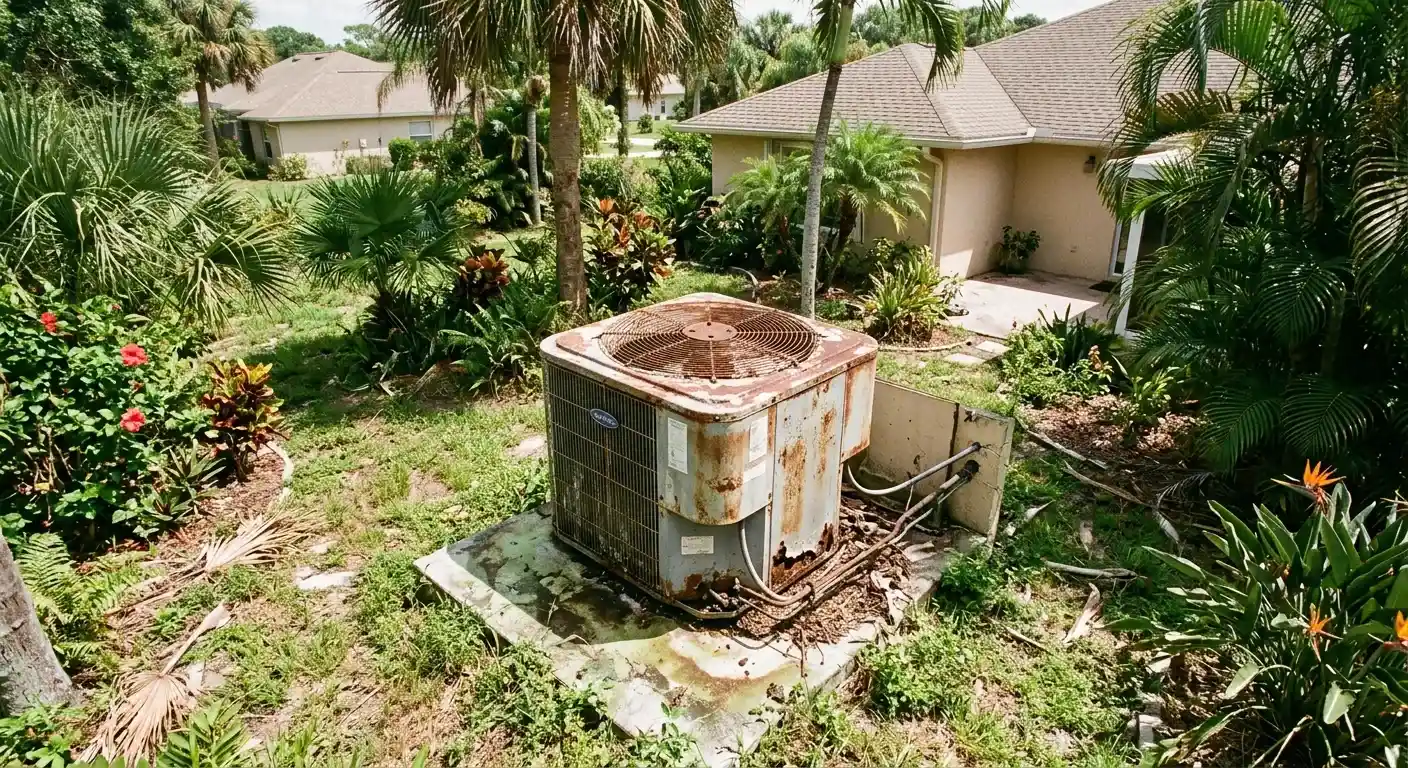
In St. Petersburg and across Pinellas County, your AC runs 8 to 10 months out of the year. That's roughly double the runtime of a system in a northern state. Add in salt air corrosion near the coast, high humidity levels, and afternoon thunderstorms that cause power surges, and the wear adds up fast.
Here's what affects your AC unit's lifespan the most:
| Factor | Impact on Lifespan |
|---|---|
| Annual maintenance | Adds 2-5 years |
| Coastal location (salt air) | Reduces 2-3 years |
| Oversized or undersized unit | Reduces 3-5 years |
| Quality of original installation | Adds or reduces 2-4 years |
| Air filter replacement frequency | Adds 1-3 years |
A system that gets regular professional maintenance will outlast a neglected one by several years. But even well-maintained units reach a point where replacement makes more financial sense than another repair.

What Are the Warning Signs You Need a New AC Unit?
Your AC usually gives clear signals before it fails completely. Here are the signs that replacement is likely on the horizon:
- Frequent repairs - If you've called for service three or more times in the past 12 months, those repair costs are adding up. A pattern of recurring breakdowns points to system-wide wear, not just one bad part.
- Rising energy bills - Compare your electric bills to the same month last year. A jump of 15% or more (with similar usage) often means your system is losing efficiency as components degrade.
- Uneven temperatures - Hot spots in some rooms while others feel fine suggest your system can't distribute air properly. This can be ductwork, but in older units it's often a compressor losing capacity.
- Your unit uses R-22 refrigerant - R-22 (Freon) was phased out of production in 2020. If your system uses it, refrigerant costs have skyrocketed, and any major repair makes replacement the smarter move.
- Excessive humidity indoors - Florida homes already fight humidity, but a healthy AC should keep indoor levels between 40-60%. If your home feels sticky even with the AC running, the system may be failing to dehumidify properly.
- Strange noises or smells - Grinding, squealing, or banging sounds signal mechanical failure. Musty or burning smells could indicate mold in the system or electrical problems.
- Your system is 10+ years old - Age alone isn't a reason to replace, but combined with any of the above signs, a system past 10 years is a strong candidate.
When to call a pro: If you notice two or more of these signs, schedule a diagnostic inspection. A licensed technician can measure your system's performance and tell you whether repair or replacement makes more sense. Watch for compressor warning signs in particular, since compressor failure on an older unit almost always means it's time for a new system.

The $5,000 Rule for AC Repair vs. Replacement
HVAC professionals use a simple formula to help homeowners decide: multiply your unit's age by the estimated repair cost. If the result exceeds $5,000, replacement is the better investment.
Here's how it works in practice:
| Unit Age | Repair Cost | Age x Cost | Recommendation |
|---|---|---|---|
| 6 years | $600 | $3,600 | Repair |
| 8 years | $800 | $6,400 | Replace |
| 12 years | $450 | $5,400 | Replace |
| 14 years | $300 | $4,200 | Borderline (consider efficiency) |
| 5 years | $900 | $4,500 | Repair |
This rule isn't absolute. A $300 repair on a 14-year-old unit might seem fine by the math, but if you've already spent $1,200 on repairs this year and the system uses R-22, replacement still wins.
Not Sure Whether to Repair or Replace?
Killian's Air Conditioning provides honest assessments for homeowners across Pinellas County. We'll tell you what makes sense for your system, your home, and your budget.
Call (727) 591-4776 or visit our website to schedule a free consultation.
Should You Repair or Replace Your AC System?
The repair-vs.-replacement decision goes beyond the $5,000 rule. Here's a comparison of key factors to consider:
| Factor | Lean Toward Repair | Lean Toward Replacement |
|---|---|---|
| System age | Under 8 years | Over 12 years |
| Repair frequency | First issue this year | 3+ calls this year |
| Refrigerant type | R-410A | R-22 (Freon) |
| SEER rating | 14+ SEER | Under 10 SEER |
| Repair cost | Under $1,000 | Over $2,500 |
| Comfort level | Still cools well | Hot spots, humidity issues |
| Energy bills | Stable | Rising year over year |
Repair makes sense when your unit is under 8 years old, the problem is isolated (a capacitor, contactor, or fan motor), and your energy bills haven't been climbing. These are relatively inexpensive parts that don't signal broader system failure.
Replacement makes sense when you're facing a major component failure (compressor, evaporator coil) on a unit that's already past its prime. Spending $2,000 to $3,500 on a compressor for a 13-year-old system rarely pays off when a new, efficient unit costs $5,000 to $10,000 and comes with a full warranty.

If your AC isn't blowing cold air and the diagnosis comes back as a refrigerant leak on an R-22 system, that's almost always a replacement situation. R-22 refrigerant can cost $100 or more per pound, making even small leaks expensive to fix.
How Much Does a New AC Unit Cost in Florida?
AC replacement costs in the Tampa Bay area typically range from $5,000 to $12,000 for a complete system (indoor and outdoor units plus installation). The final price depends on your home's size, the system type, and the efficiency rating you choose.
| System Type | Home Size | Typical Cost Range |
|---|---|---|
| Central AC (basic, 14-15 SEER2) | 1,200-1,800 sq ft | $5,000-$7,500 |
| Central AC (mid-range, 16-17 SEER2) | 1,500-2,500 sq ft | $7,000-$9,500 |
| Central AC (high-efficiency, 18+ SEER2) | 2,000-3,000 sq ft | $9,000-$12,000 |
| Ductless mini-split (single zone) | 1 room/zone | $3,000-$5,000 |
| Ductless mini-split (multi-zone) | 2-4 rooms | $6,000-$14,000 |
Florida-specific costs that often surprise homeowners:
- Permit fees - Pinellas County requires a mechanical permit for AC replacement, typically $75 to $200
- Hurricane strapping - Code may require updated equipment tie-downs, adding $100 to $300
- Electrical upgrades - Older homes may need panel or disconnect upgrades for a new high-efficiency unit
- Ductwork modifications - If switching to a different capacity unit, duct resizing may be needed
These costs vary by contractor, equipment brand, and your home's specific needs. Always get at least two written estimates before making a decision.

Florida Rebates and Tax Credits for New AC Systems
The federal government offers 25C tax credits for qualifying high-efficiency HVAC equipment, up to $600 for central air conditioners or up to $2,000 for heat pumps. To qualify, your new system generally needs to meet Energy Star Most Efficient criteria.
Local utility rebates can add to those savings. Duke Energy and Tampa Electric (TECO) periodically offer rebates of $150 to $500 for high-efficiency AC installations. Check your utility provider's website for current programs, as rebate amounts and availability change.
To maximize savings, choose a system rated 16 SEER2 or higher and keep all receipts and manufacturer certification statements for tax filing. Your HVAC contractor should be able to confirm whether your chosen system qualifies.
What SEER2 Rating Should You Choose for a Florida Home?
SEER2 (Seasonal Energy Efficiency Ratio 2) measures cooling efficiency. Higher numbers mean less electricity to produce the same cooling. As of January 2023, the minimum for new installations in the Southeast (including Florida) is 15 SEER2.
Here's how different SEER2 ratings compare for a typical 3-ton system in the Tampa Bay area:
| SEER2 Rating | Estimated Annual Cooling Cost | Savings vs. 10 SEER (old unit) |
|---|---|---|
| 10 SEER (old system) | ~$1,450 | Baseline |
| 15 SEER2 (minimum new) | ~$970 | ~$480/year |
| 16 SEER2 | ~$910 | ~$540/year |
| 18 SEER2 | ~$810 | ~$640/year |
| 20+ SEER2 | ~$725 | ~$725/year |
Estimates based on average Pinellas County electricity rates and typical cooling loads. Actual savings vary by home size, insulation, and usage patterns.
The sweet spot for most Florida homeowners is 16 to 18 SEER2. Going from 15 to 16 SEER2 adds roughly $500 to $1,000 to your equipment cost but saves $60 or more per year, paying for itself within a few years. Jumping to 20+ SEER2 costs significantly more upfront, and the incremental savings shrink at higher ratings.
If you plan to stay in your home for 10+ years, a higher SEER2 system makes financial sense. If you might sell within 5 years, a 15-16 SEER2 unit gives you good efficiency without over-investing.
When Is the Best Time of Year to Replace Your AC in Florida?
The best time to replace your AC in the Tampa Bay area is late fall through early spring (November through March). During these months, HVAC companies have more availability, installation schedules are flexible, and you may find better pricing or promotional offers.
Summer is the worst time to need a replacement. June through August, every HVAC company in Pinellas County is slammed with emergency repair and replacement calls. Wait times stretch to days or even weeks, and there's less room to negotiate on pricing.
Planning ahead gives you advantages:
- Time to compare quotes - Get 2-3 estimates without the pressure of a broken system
- Equipment availability - Popular models and sizes are in stock, not backordered
- Flexible scheduling - Choose a day that works for you, not the first opening in two weeks
- Potential off-season deals - Some manufacturers and contractors offer fall/winter promotions
If your system is 12+ years old and showing signs of decline, don't wait for it to fail on the hottest day of the year. Schedule an evaluation now and plan the replacement on your terms.
Before your new system goes in, review our AC installation checklist so you know what to expect on installation day and what questions to ask your contractor.
Frequently Asked Questions About AC Replacement
Can I just replace the outside unit without the indoor unit?
Technically yes, but it's not recommended. Mismatched indoor and outdoor units lose efficiency because the components aren't designed to work together at the same capacity. You'll also likely void the manufacturer's warranty, and the system won't meet current SEER2 efficiency standards. Replacing both units together costs more upfront but delivers better performance, lower energy bills, and full warranty coverage.
How long does it take to install a new AC system?
A standard like-for-like replacement typically takes 4 to 8 hours in a single day. The crew removes your old equipment, installs the new indoor and outdoor units, connects refrigerant lines, and tests the system. More complex jobs that involve ductwork changes, electrical panel upgrades, or relocating equipment can take 1 to 2 days.
Will a new AC unit lower my electric bill?
Yes, and the difference can be substantial. Upgrading from an old 10 SEER system to a new 16 SEER2 unit can cut cooling costs by 30% to 40%. For a Clearwater or Largo home running AC 9 months a year, that translates to roughly $400 to $600 in annual savings. The exact amount depends on your home's size, insulation, and thermostat habits.
Do I need a permit to replace my AC in Pinellas County?
Yes. Pinellas County requires a mechanical permit for AC system replacement. Your licensed HVAC contractor handles the permit application and scheduling of the required inspection. The permit ensures the installation meets Florida Building Code requirements for equipment sizing, electrical connections, and hurricane tie-downs. Permit fees are typically $75 to $200.
Is it worth replacing a 10-year-old AC unit?
It depends on the unit's condition and history. A 10-year-old system that has been well-maintained, runs on R-410A refrigerant, and hasn't needed major repairs may have 3 to 5 good years left. But if you're facing a compressor or evaporator coil failure, rising energy bills, or the unit still uses R-22, replacement is the smarter financial decision at that age.
What size AC unit do I need for my Florida home?
Florida homes typically need 1 ton of cooling per 400 to 500 square feet, which is higher than the national guideline of 500 to 600 square feet per ton. The extra capacity handles Florida's intense heat and humidity. A proper Manual J load calculation considers your home's square footage, insulation, window placement, ductwork, and orientation to determine the exact size you need. Oversizing wastes energy and creates humidity problems, so accurate sizing matters.
Make the Right Call on Your AC Replacement
Replacing your AC is one of the biggest home investments you'll make, and getting the timing right saves you money and stress. If your system is over 10 years old, uses R-22 refrigerant, or keeps needing expensive repairs, the numbers almost always favor a new, efficient unit.
The key takeaways:
- Florida AC units last 10-15 years with proper maintenance
- Use the $5,000 rule (age x repair cost) as a starting guideline
- Choose 16-18 SEER2 for the best return on investment
- Replace during fall or spring for better pricing and scheduling
- Always get a Manual J load calculation for proper sizing
Killian's Air Conditioning serves homeowners across St. Petersburg, Clearwater, Largo, Seminole, Pinellas Park, and surrounding Pinellas County communities. We provide honest, no-pressure assessments to help you decide whether repair or replacement is right for your home.
Call (727) 591-4776 to schedule your free AC evaluation. Licensed and insured, CAC1823158. Life's a Breeze with Killian's Air.