
AC Short Cycling: Causes, Fixes & When to Call a Pro
AC Short Cycling: Why Your AC Keeps Turning On and Off (and How to Fix It)
If your AC keeps turning on and off every few minutes, you are dealing with AC short cycling, and it is one of the most common cooling problems we diagnose in Pinellas County homes. Short cycling means your system starts a cooling cycle, runs briefly, shuts down before the house is comfortable, and then restarts a few minutes later.
The most frequent culprits are a clogged air filter, a thermostat issue, low refrigerant, a frozen evaporator coil, an oversized system, or an electrical fault. The good news: many causes of AC short cycling are easy to identify, and several are fixable in minutes without a service call.
This guide walks through what AC short cycling is, the eight most common reasons your air conditioner short cycling happens, how to tell short cycling apart from normal operation, and a step-by-step path to fix it. We have spent years servicing St. Petersburg and Clearwater homes through brutal Florida summers, so we will also flag exactly which problems you can safely handle yourself and which ones need a licensed technician.
What Is AC Short Cycling and Why Does It Matter?
AC short cycling is when your air conditioner runs in cycles that are too short to finish the job, often stopping after only a few minutes instead of running a full cooling cycle. A healthy central AC in our climate usually runs somewhere in the range of 10 to 20 minutes per cycle and completes roughly two to three cycles per hour on a moderate day.
When the system fires up, runs for two or three minutes, shuts off, and repeats over and over, that rapid pattern is short cycling.
This matters for more than comfort. In St. Petersburg and across Pinellas County, your AC does double duty: it cools the air and pulls out the heavy coastal humidity. Short cycles do not run long enough to dehumidify, so your home can feel clammy even when the thermostat reads the right number. On top of that, every startup is the hardest moment for the system, drawing the most electricity and putting the most strain on the compressor.
Here is why short cycling deserves quick attention:
- Higher energy bills. Frequent restarts spike power draw and waste electricity.
- Poor humidity control. Short runtimes leave moisture in the air, which feels sticky and can encourage mold.
- Uneven cooling. Rooms farther from the air handler never catch up before the system shuts off.
- Premature wear. Repeated starts age the compressor and motors faster than steady operation.
Why Does My AC Keep Turning On and Off? The 8 Most Common Causes
When homeowners ask us why does my AC keep turning on and off, the answer almost always traces back to one of eight issues. Some restrict airflow, some trip a safety control, and some are sizing or electrical faults. The table below maps each common cause of ac short cycling to its telltale symptom and whether it is a do-it-yourself fix or a job for a technician.

| Cause | Why It Short Cycles | Typical Symptom | Fix-It Level |
|---|---|---|---|
| Dirty air filter | Restricts airflow, trips limit switch, can freeze coil | Weak airflow, runs then stops | DIY |
| Thermostat problem | Misreads temperature or loses signal to the unit | Erratic on/off, wrong room temp | DIY or Pro |
| Low refrigerant or leak | Pressure drops trip the safety controls | Warm air, hissing, ice on lines | Pro |
| Frozen evaporator coil | Ice blocks airflow until system stops | Ice on indoor coil or lines | DIY thaw, Pro for cause |
| Oversized AC unit | Cools too fast, hits setpoint, shuts off early | Very short cycles, humid home | Pro |
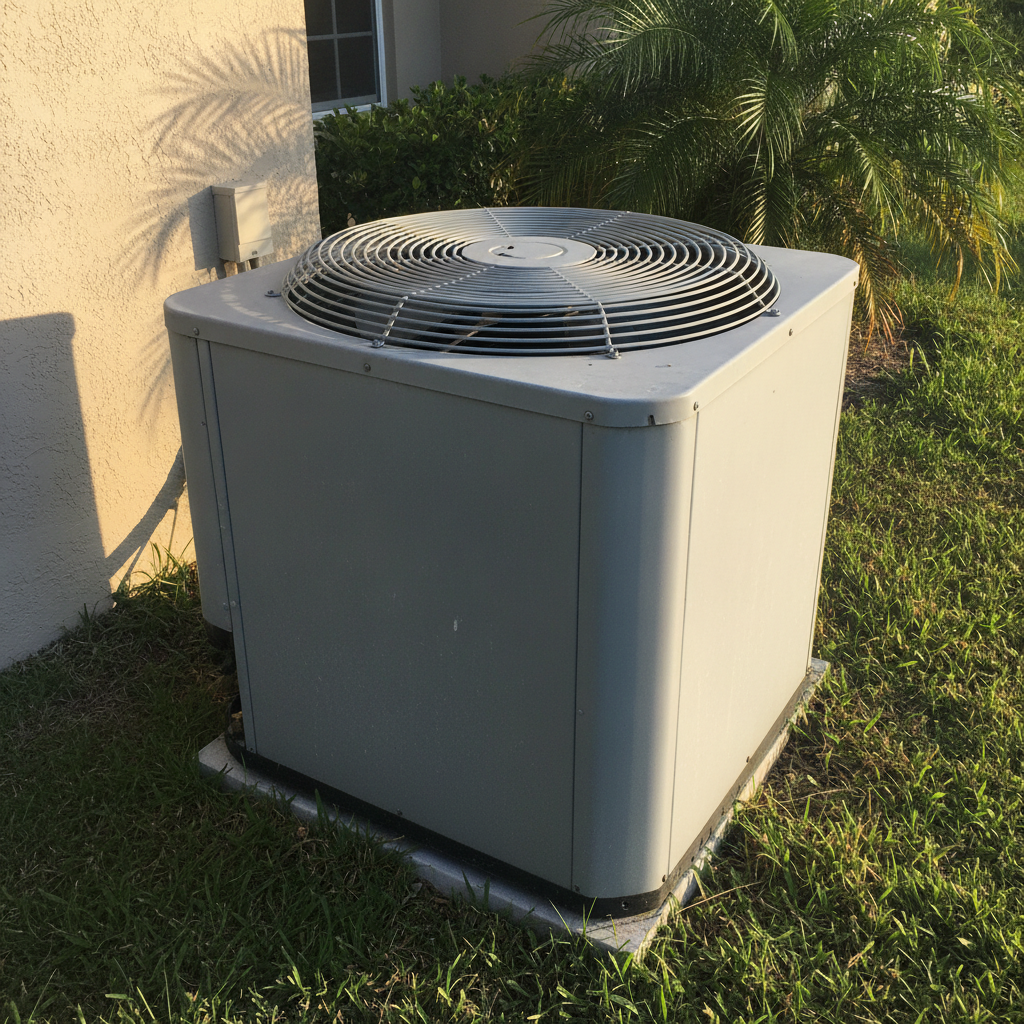
| Dirty condenser coil | Outdoor unit cannot reject heat, overheats | Outdoor unit hot, frequent trips | DIY rinse or Pro |
| Electrical or capacitor fault | Failing capacitor or control board interrupts power | Clicking, humming, no start | Pro |
| Clogged condensate drain | Float safety switch shuts the system off | Stops after running, water near unit | DIY clear or Pro |
Each cause behaves a little differently, and a quick visual check often points you in the right direction. A unit that ices over almost always has either airflow restriction or a refrigerant problem. A system that shuts off the instant water backs up near the air handler is usually tripping the condensate drain safety switch. We break these into two groups below so you know where to start.
Easy Causes You Can Check Yourself
Before you call anyone, run through the simple stuff. In our experience, a meaningful share of ac short cycling calls in St. Petersburg trace back to something a homeowner can correct in a few minutes. Start here:
- Replace the air filter. A filter clogged with Florida dust and pet hair chokes airflow and is the number one cause we see. Swap it and run the system again.
- Check the thermostat. Replace weak batteries, confirm it is set to "cool," and make sure it is not mounted in direct sunlight or above a heat-producing appliance, which can fool it into rapid on/off behavior.
- Open blocked vents and returns. Closed supply registers and furniture-blocked return grilles starve the system of airflow. Open and clear them.
- Reset a tripped float switch. If your air handler has a condensate safety switch and the drain line is clogged, clearing the line and resetting the switch can restore normal operation.
Causes That Need a Licensed Technician
The remaining causes involve sealed refrigerant, live electrical components, or system sizing, and they are not DIY territory. Handling refrigerant without an EPA certification is illegal, and a charged capacitor can hold a dangerous shock even with the power off. These need a pro:
- Low refrigerant or a leak. Refrigerant does not get "used up," so low charge means a leak that must be found, repaired, and recharged by a certified technician.
- A failing capacitor, contactor, or control board. These electrical faults interrupt the compressor circuit and cause it to stop and restart.
- A compressor that hard-starts. A compressor struggling to start can trip its internal overload and short cycle.
- An oversized system. If your AC was sized too large for the home, the only lasting fix is correcting airflow, staging, or in some cases right-sizing the equipment.
AC short cycling in St. Petersburg? Call now for same-day diagnosis.
Killian's Air Conditioning - Licensed & Insured (FL CAC1823158)
📞 (727) 591-4776How Do I Know If My AC Is Short Cycling?
You know your AC is short cycling when the cooling cycles are clearly too short to do their job, usually shutting off in under 10 minutes and well before the house reaches the temperature you set. The easiest test is to time it. Grab your phone, note when the system starts, and note when it stops. If you see repeated cycles of just a few minutes, separated by short pauses, that is short cycling.

Watch for this cluster of symptoms that tells you the air conditioner short cycling is real and not just normal operation on a mild day:
- The system runs, then stops before reaching the thermostat setpoint, over and over.
- Cycles are noticeably shorter than 10 minutes.
- Your home feels humid or sticky even when the temperature reads correctly.
- Energy bills climbed without a change in your habits.
- You hear frequent clicking or relay sounds from the air handler or outdoor unit.
- Some rooms cool while others stay warm.
It is worth separating two different problems that sometimes get confused. A unit that runs constantly and never shuts off is the opposite issue and usually points to undersizing, low charge, or extreme heat load. True short cycling is the rapid start-stop-start pattern. When your AC turns on and off repeatedly in quick bursts, that is the signature of short cycling, and the timing test above confirms it.
How to Fix AC Short Cycling: Step-by-Step
To fix ac short cycling, work from the simplest, cheapest checks toward the more technical ones, and stop as soon as the system returns to normal full-length cycles. Follow this sequence in order:

- Replace the air filter. Install a fresh filter of the correct size and rating, then run the system for 20 minutes and time the cycle.
- Reset the thermostat and float switch. Swap thermostat batteries, set it to "cool," and if your drain has a safety switch, clear the condensate line and reset it.
- Clear airflow paths. Open all supply vents, unblock return grilles, and gently rinse leaves and grass clippings off the outdoor condenser so it can shed heat.
- Thaw a frozen coil. If you see ice on the indoor coil or refrigerant lines, turn the system to "fan only" and let it fully thaw before running cooling again, then watch for it to refreeze.
- Call a licensed technician. If the system still short cycles, the cause is likely refrigerant, electrical, or sizing, and those require professional tools and certification to diagnose and repair safely.
The reference table below maps each common cause to its fix and a realistic sense of effort. Repair costs vary widely by the specific part and labor, so we have kept this to scope rather than dollar figures.
| Cause | Fix | Effort / Who |
|---|---|---|
| Dirty air filter | Replace filter | Minutes, DIY |
| Thermostat battery or location | Replace battery, relocate or recalibrate | Minutes to short visit |
| Clogged condensate drain | Clear line, reset float switch | DIY or short visit |
| Frozen evaporator coil | Thaw, then fix the airflow or charge cause | DIY thaw, Pro for root cause |
| Low refrigerant or leak | Locate leak, repair, recharge | Pro, EPA certified |
| Capacitor or control board | Test and replace failed component | Pro |
| Oversized system | Correct staging, airflow, or equipment | Pro |
If you reach step five and the problem persists, that is your cue to bring in help rather than keep cycling the unit, which only adds wear. We carry the gauges, meters, and certifications to pinpoint refrigerant and electrical faults safely.
Can Short Cycling Damage My AC Compressor?
Yes, ongoing ac short cycling can absolutely damage your compressor, which is the most expensive single component in your system. The compressor draws its heaviest electrical load at startup, and the motor windings generate heat every time it kicks on. When the unit starts and stops dozens of extra times an hour, that heat does not have time to dissipate, and the cumulative stress wears the compressor out faster than steady, full-length cycles ever would.
Left alone, short cycling tends to snowball. The compressor runs hotter, electrical components age, and a part that might have lasted years can fail in a single brutal Florida summer. We have replaced compressors in Pinellas County homes where a cheap, ignored cause, like a dirty filter freezing the coil, eventually contributed to a far costlier failure.
If you want to understand the early failure signals, our guide on AC compressor warning signs covers the sounds and symptoms to watch for, and our overview of when to replace your AC unit helps you weigh repair against replacement.
There is also a comfort cost. Because short cycles never run long enough to wring moisture out of the air, your home stays humid. In our coastal climate that means a clammy feel, and over time excess indoor humidity can encourage mold growth. Addressing short cycling early protects both the equipment and your indoor air.
How to Prevent AC Short Cycling in Pinellas County Homes
The best way to prevent ac short cycling is consistent maintenance and a correctly sized system, because most of the causes above are either airflow-related or wear-related. A little routine care keeps your air conditioner running full, efficient cycles through the worst of the Tampa Bay heat.
Build these habits into your year:
- Change filters on a schedule. In a Florida home with pets or heavy dust, checking the filter monthly and replacing it as needed prevents the most common cause of short cycling.
- Book an annual tune-up before summer. A spring inspection catches low refrigerant, weak capacitors, and dirty coils before they leave you short cycling in July. Our AC maintenance guide walks through what a thorough service includes.
- Keep the condenser clear. Rinse the outdoor coil and keep at least a couple of feet of clearance around it so it can reject heat. Our salt-laden coastal air is hard on outdoor coils, so they need attention here.
- Set the thermostat wisely. Avoid aggressive temperature swings that make the system cycle harder than it needs to. Our tips on thermostat settings for summer help you stay comfortable without overworking the unit.
- Size replacements correctly. If you are replacing a system, insist on a proper load calculation rather than simply matching the old tonnage. An oversized unit is a leading cause of chronic short cycling, and our AC unit size guide explains how proper sizing works.
A right-sized, well-maintained system that has clean airflow and a healthy charge has very little reason to short cycle. That is exactly the outcome we aim for on every maintenance visit.
When to Call Killian's Air for AC Short Cycling in St. Petersburg
If you have replaced the filter, checked the thermostat, cleared your vents, and your AC keeps turning on and off, it is time to bring in a licensed technician. Short cycling driven by refrigerant, electrical, or sizing problems will not fix itself, and every extra cycle adds wear to your compressor. The sooner the underlying cause is found, the cheaper and simpler the repair usually is.
To recap the essentials: ac short cycling means your system runs in cycles too short to cool and dehumidify, typically under 10 minutes; the usual causes range from a clogged filter to low refrigerant, a frozen coil, an oversized unit, or an electrical fault; the easy causes are DIY while refrigerant, electrical, and sizing issues need a pro; and ignoring the problem stresses the compressor and drives up your bills. Catch it early and it is very fixable.
We are a family-owned, licensed Florida HVAC contractor serving St. Petersburg, Clearwater, Largo, Seminole, and the rest of Pinellas County, and we are EPA and NATE certified to handle every cause of short cycling safely. With same-day service and 24/7 emergency availability, we can get your AC back to full, comfortable cycles fast. If your air conditioner is short cycling, reach out and let us diagnose it before the next heat wave.
Frequently Asked Questions
Is it bad if my AC short cycles? Yes, short cycling is a problem you should address quickly. It wastes electricity because the compressor draws its biggest load at every startup, and the short runtimes fail to remove humidity from your home. Over time, the repeated starts stress the compressor and motors, which can shorten the life of your system. In our humid Florida climate, it also leaves your home feeling sticky and can encourage mold growth.
How many times should my AC cycle per hour? On a moderate day, a properly sized central AC typically completes about two to three full cycles per hour, with each cooling cycle running in the range of 10 to 20 minutes. On a very hot day the unit may run longer cycles or run almost continuously, which is normal under heavy load. The warning sign is many short cycles of just a few minutes each. If you time your system and see frequent cycles well under 10 minutes, that points to short cycling.
Can a dirty air filter cause short cycling? Yes, a dirty air filter is one of the most common causes we find. When the filter clogs, it restricts airflow across the indoor coil, which can trip a safety limit and shut the system down early. Restricted airflow can also cause the coil to freeze, which blocks airflow further and stops the unit. Replacing a dirty filter is the first and cheapest fix to try, and it resolves a surprising number of cases.
Why does my AC turn on and off every few minutes? An AC that turns on and off every few minutes is short cycling, and the common causes are a thermostat problem, a frozen evaporator coil, low refrigerant, an oversized unit, or an electrical fault like a failing capacitor. Start with the simple checks: replace the filter, confirm the thermostat is working and not in direct sunlight, and open any blocked vents. If those do not restore normal cycles, the cause is likely a refrigerant, electrical, or sizing issue that needs a licensed technician.
Can an oversized AC unit cause short cycling? Yes, an oversized AC unit is a frequent and often overlooked cause. A system that is too large for the home cools the air so quickly that it reaches the thermostat setpoint and shuts off before it has run long enough to remove humidity. Then the temperature creeps back up and the unit restarts, repeating the cycle many times an hour. This is why correct sizing with a proper load calculation matters so much when you replace a system.
How much does it cost to fix AC short cycling? The cost depends entirely on the cause, so it varies widely. A new air filter or a fresh set of thermostat batteries is inexpensive and something most homeowners can do themselves. Repairs involving refrigerant, electrical components like a capacitor, or the compressor cost more because they require professional diagnosis, parts, and certified labor. The most reliable way to get an accurate number is to have a technician diagnose the specific cause, since guessing often leads to paying for the wrong fix.