
AC Leaking Water Inside? Causes, Fixes & Prevention Tips
AC Leaking Water Inside? Causes and How to Fix It
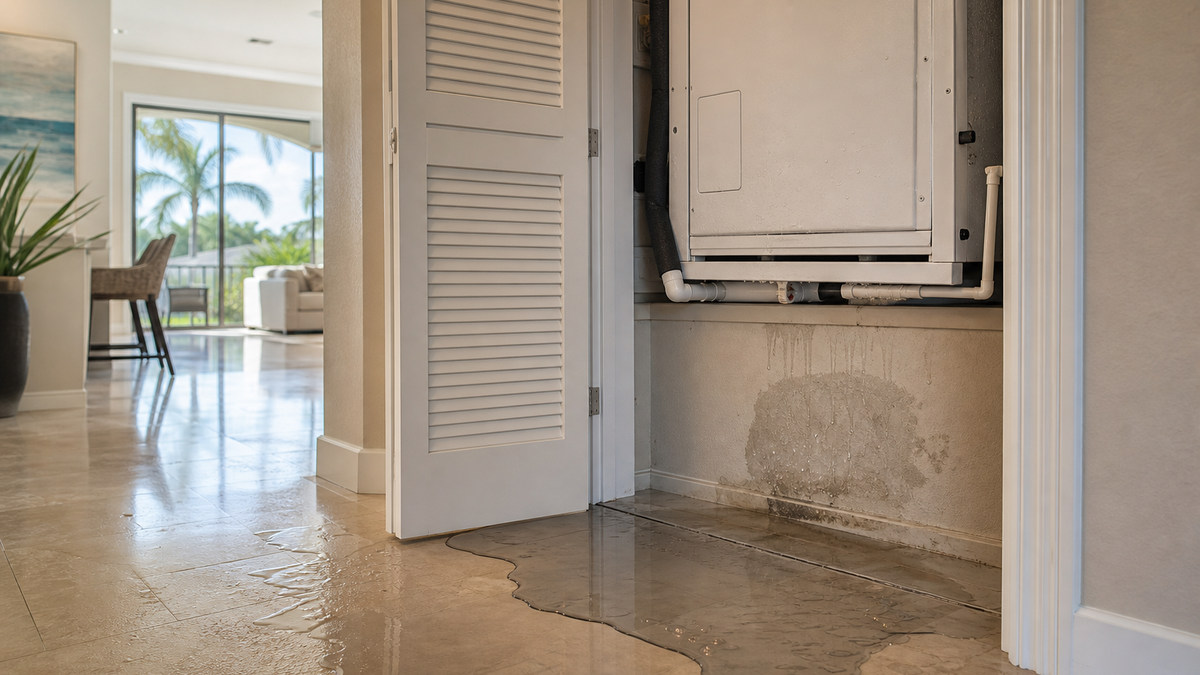
If your AC is leaking water inside the house, the most common cause by far is a clogged condensate drain line, and the first thing to do is shut the system off so it stops making more water. That single step protects your floors, drywall, and ceiling while you figure out what went wrong. In our experience servicing St. Petersburg and Pinellas County homes, roughly the majority of indoor AC water leaks we see trace back to a drain line that has packed up with algae and dirt, though a frozen coil, a dirty filter, or a cracked drain pan can cause the same mess.
The good news is that many of these leaks are something you can diagnose and even fix yourself in an afternoon. Below we walk through why an AC leaks water inside, how to confirm the cause, the exact steps to take right now, and when it is smarter to call a licensed technician. We have pulled this together from years of clearing drain lines in humid Florida homes, so it reflects what actually happens in the field, not just textbook theory.
Why Is My AC Leaking Water Inside the House?
Your air conditioner is supposed to make water. As warm, humid indoor air passes over the cold evaporator coil inside your air handler, moisture condenses out of the air the same way it beads up on a cold glass of iced tea. That condensation collects in a drain pan beneath the coil and flows out through a PVC condensate drain line, usually exiting near your outdoor unit or a nearby drain. When everything works, you never see a drop indoors.
An AC leaking water inside means that water is escaping before it reaches the outside. Something is either blocking the drainage path, overwhelming it, or letting water spill where it should not. Here are the usual culprits we check, roughly in the order we find them:
- Clogged condensate drain line - algae, mold, and dust build up and back the water up into the pan until it overflows.
- Full, rusted, or cracked drain pan - an older pan can corrode through and drip even when the line is clear.
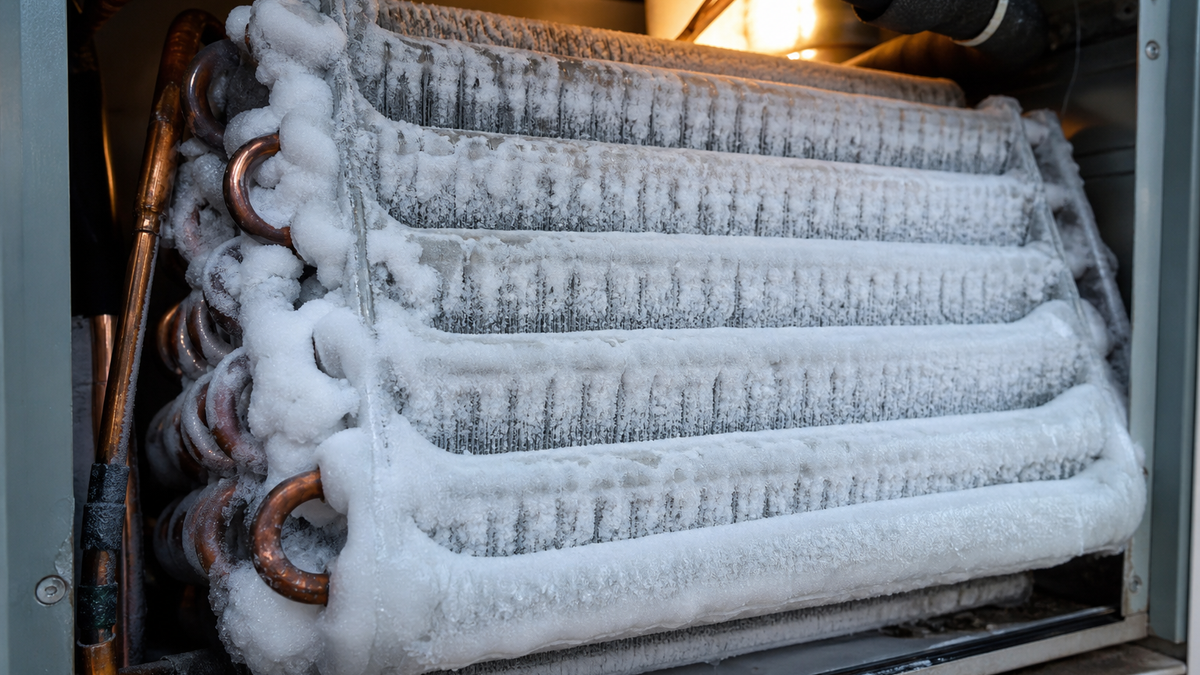
- Frozen evaporator coil - a coil that ices up dumps a flood of water when it thaws, far more than the pan can hold.
- Dirty air filter - restricted airflow chills the coil until it freezes, which loops back to the leak above.
- Low refrigerant - a refrigerant leak also freezes the coil and produces the same overflow.
- Disconnected or improperly sloped drain line - a line that has slipped or was installed without enough slope simply will not drain.
- Failed condensate pump - homes that rely on a pump to lift water out will leak the moment that pump quits.
- High indoor humidity - during a brutal Florida summer, the system can produce more condensate than a marginal drain can keep up with.
Most of these point back to the drain line, so that is where we start. The rest of this guide moves from that single most likely cause out to the less common ones, then into exactly what to do.
Is a Clogged Condensate Drain Line the Most Common Cause?
Yes. A clogged condensate drain line is the number one reason we get calls about an AC leaking water inside, and it is even more common here than in drier parts of the country. The drain line is a length of PVC pipe carrying warm, damp water, which is a perfect breeding ground for algae and mold. Over a season or two, that growth combines with the dust and dirt that wash off the coil and forms a slimy plug inside the pipe.
Once the line clogs, water has nowhere to go. It backs up into the drain pan and rises until it spills over the edge, landing on the floor, the ceiling below an attic air handler, or inside a closet. Many modern systems have a small float switch in the pan or drain line that is supposed to shut the AC off before it overflows, but those switches can stick, be missing, or be installed only on the secondary pan. When the safety switch does its job, you get a system that quietly stops cooling instead of a puddle, which is its own clue.
Pinellas County homes are especially prone to clogged AC drain lines because we run our air conditioners hard for most of the year. A long cooling season plus near-constant humidity means the drain line stays wet and warm for months on end, giving algae plenty of time to take hold. A line that might last a year up north can clog in a single summer here in St. Petersburg.
Signs Your Drain Line Is the Problem
These symptoms point strongly toward a clogged condensate drain line rather than another cause:
- Water pooling near the indoor air handler - the leak shows up right at the unit or in the pan beneath it.
- A musty or moldy smell - standing water in the pan and line breeds odor-causing mold.
- The AC shuts off on its own - a tripped float switch cuts power to protect against overflow.
- Gurgling or bubbling sounds - water struggling past a partial clog makes noise.
- Little or no water exits the outdoor drain stub - on a hot, humid day a healthy system drips steadily outside; a dry stub during heavy cooling means the water is stuck somewhere.
If you are seeing two or more of these, a drain line clog is very likely, and the do-it-yourself steps further down will usually clear it.
AC leaking water inside? We will stop the leak before it damages your home.
Killian's Air Conditioning - Licensed & Insured
📞 (727) 591-4776What Other Problems Make an AC Leak Water Inside?
When the drain line is clear and water still appears, one of these other issues is to blame. We see each of them regularly, and the table below sorts them by what is happening and whether a confident homeowner can handle it.
| Cause | Why it leaks water inside | DIY-fixable? |
|---|---|---|
| Dirty air filter | Restricts airflow, the coil gets too cold and freezes, then floods the pan when it thaws | Yes, replace the filter |
| Low refrigerant | A refrigerant leak drops coil temperature, freezing it and causing overflow on thaw | No, requires EPA-certified service |
| Rusted or cracked drain pan | Corroded or split pan drips even with a clear line | No, needs pan replacement |
| Broken condensate pump | Pump that lifts water out has failed, so water backs up and spills | Sometimes, often a pro repair |
| Disconnected or poorly sloped drain line | Line slipped off the fitting or lacks downhill slope, so it cannot drain | Sometimes, depends on access |
| High indoor humidity | System produces more condensate than a marginal drain can carry | Partly, improve drainage and humidity control |
The one that surprises homeowners most is the frozen evaporator coil. When airflow is choked off by a clogged filter, or when refrigerant runs low, the coil temperature drops below freezing and a block of ice forms on it. The system seems to be running but barely pushes out cool air. Then, when it cycles off or you finally shut it down, all that ice melts at once and pours straight past the drain pan onto the floor. If you spot ice on the coil or on the copper refrigerant lines, do not chip at it. Turn the system off, let it thaw fully, and address the airflow or refrigerant problem behind it.
What Should I Do When My AC Is Leaking Water Inside?
When you find your AC leaking water inside, work through these steps in order. The first two protect your home, and the rest move you toward a fix.
- Turn off the AC at the thermostat. Set it to off, not just a higher temperature. This stops the unit from making more condensation and prevents a frozen coil from getting worse. It is the single most important step.
- Mop up standing water and protect surfaces. Soak up puddles with towels and place a bucket or pan under the active drip. Move anything that water damages, and pull back rugs or boxes near an attic or closet air handler.
- Check and replace the air filter. A clogged filter is cheap to swap and is a frequent root cause. If it looks gray and packed with dust, put in a fresh one before doing anything else.
- Inspect the drain pan. Look at the pan under the air handler. If it is full of water, the line is likely clogged. If the pan itself is rusted through or cracked, you have found your leak and will need a replacement pan.
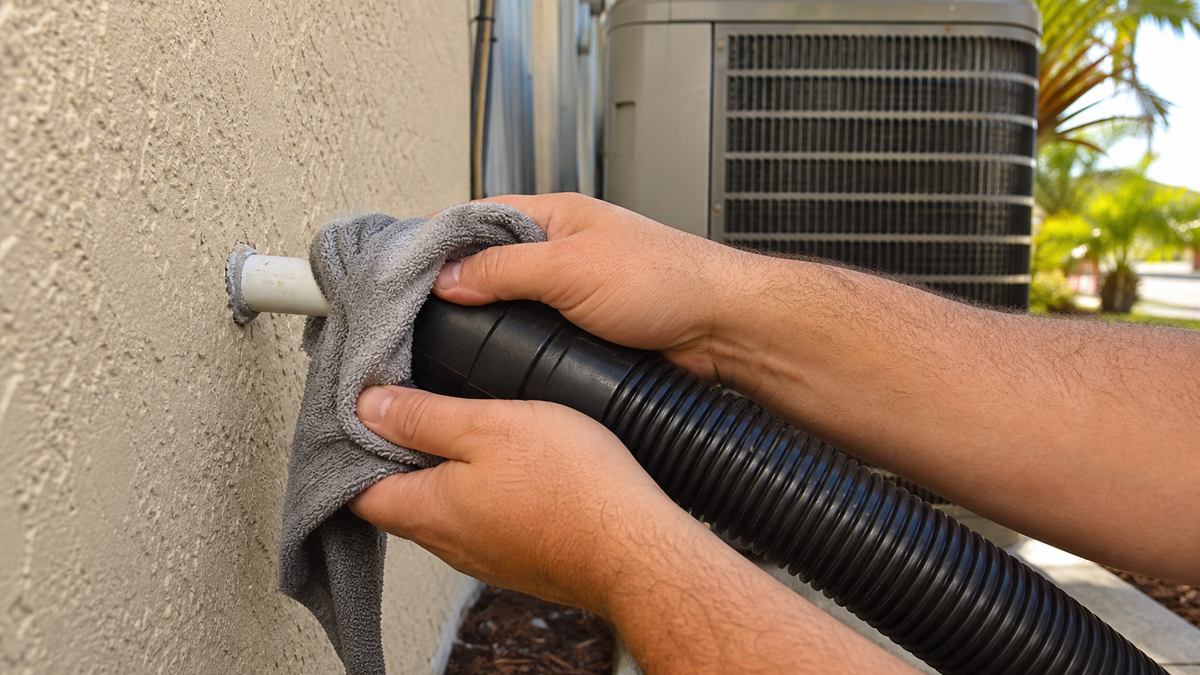
- Clear the drain line with a wet/dry vacuum. Find the outdoor condensate drain stub (a small white PVC pipe near the outdoor unit) and use a shop vacuum to suck the clog out from that end. This pulls the algae plug free in most cases.
- Flush the line to keep it clear. Once water flows again, pour a cup of distilled white vinegar into the indoor access port on the drain line to kill remaining algae and slow future buildup.
If water stops appearing and the drain flows freely, you have likely solved it. If the pan refills, you see ice, or no water comes out of the outdoor stub even after vacuuming, stop and call a professional. Pushing further risks turning a simple service call into water damage and mold remediation, which is a far bigger expense in our humid climate.
How to Unclog an AC Drain Line Yourself
Clearing a clogged AC drain line is one of the more approachable HVAC repairs, and many St. Petersburg homeowners handle it without a service call. Here is the method we recommend:
- Locate the outdoor drain stub. Look for a short white PVC pipe sticking up or out near your outdoor condenser. That is the end of the condensate line.
- Attach a wet/dry vacuum. Hold the vacuum hose tightly over the pipe opening. Wrapping a rag or duct tape around the seam improves suction. A small shop vac works best.
- Run the vacuum for two to three minutes. You should hear the clog break loose and water rush into the vacuum tank. That sound means the line is clearing.
- Flush with vinegar. Find the indoor access port, usually a capped tee fitting near the air handler. Pour in about a cup of distilled white vinegar to dissolve algae. Repeat this flush monthly during cooling season as prevention.
A quick caution: avoid pouring bleach into systems that connect to certain drain materials or where it can splash on metal components, since it can corrode them over time. Vinegar is gentler and effective for routine maintenance. If you cannot find the access port or the clog will not budge, that is a reasonable point to bring in a technician.
When Should You Call a Professional for an AC Water Leak?
Some indoor AC leaks are beyond a do-it-yourself fix, and trying to force them usually costs more in the end. Call a licensed HVAC professional if any of the following apply:
- The leak returns after you have cleared the drain line and replaced the filter.
- You see ice on the evaporator coil or the refrigerant lines, which points to airflow or refrigerant problems that require trained diagnosis.
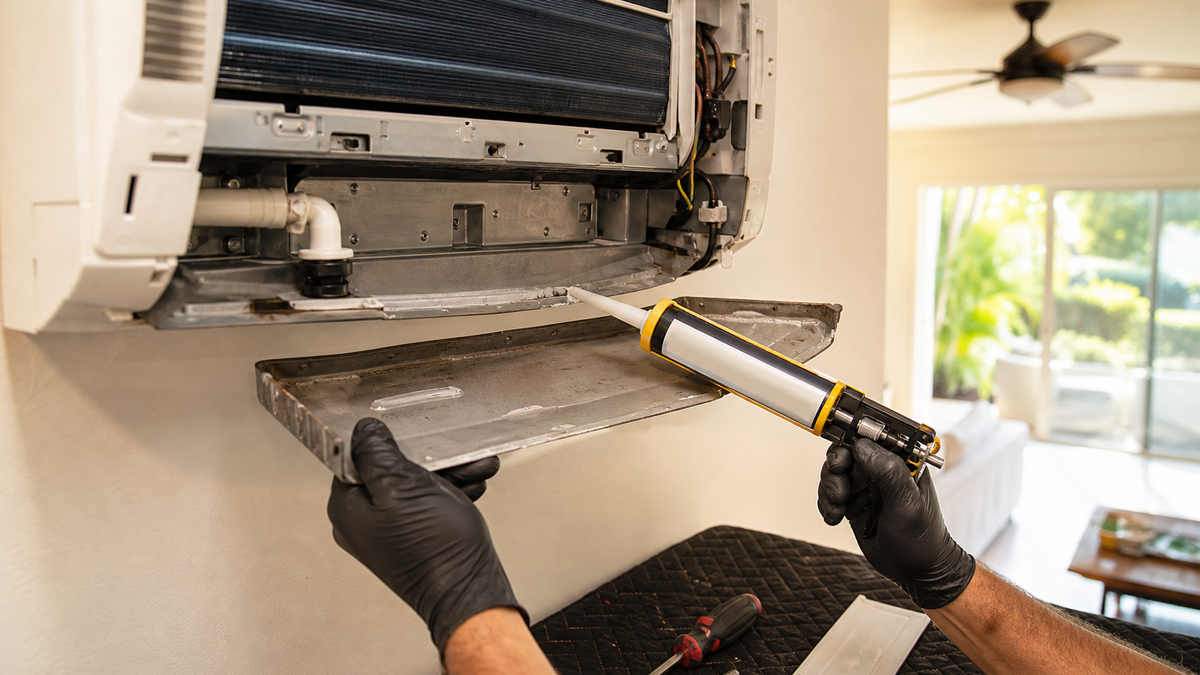
- The drain pan is cracked or rusted through and needs replacement.
- A condensate pump has failed and water no longer gets lifted out.
- No water exits the outdoor stub even after vacuuming, suggesting a deeper blockage or a disconnected line inside the wall or attic.
- Water is near electrical components or has reached drywall, ceilings, or flooring, where damage and mold become real risks.
Here is a quick guide to which leak situations are safe to tackle yourself and which ones call for a licensed technician:
| Situation | Safe to DIY? | Why |
|---|---|---|
| Clogged drain line, water in the pan | Yes | A wet/dry vacuum and a vinegar flush usually clear it |
| Dirty air filter restricting airflow | Yes | A fresh filter is a quick, low-risk swap |
| Ice on the coil or refrigerant lines | No | Points to airflow or refrigerant faults that need trained diagnosis |
| Cracked or rusted drain pan | No | Requires a proper replacement pan and reseal |
| Failed condensate pump | No | Electrical and plumbing work near water |
| Leak returns after you cleared the line | No | A deeper blockage or hidden break needs a pro |
This is the kind of work our team handles every day across St. Petersburg, Clearwater, Largo, and the rest of Pinellas County. As an EPA certified and NATE certified contractor, we can safely diagnose refrigerant and coil issues that homeowners are not equipped to touch. We also offer same-day and 24/7 emergency support, because an AC leaking water inside during a Florida summer is not something that should wait days for an appointment. The faster the leak is stopped, the lower the risk of warped floors, stained ceilings, and the musty mold growth that thrives in our humidity.
How Can Pinellas County Homeowners Prevent AC Water Leaks?
Most indoor AC leaks are preventable with a little routine attention. Because we run our systems so much of the year here, prevention matters more in St. Petersburg than in cooler climates. Build these habits into your home maintenance:
- Change the air filter every one to two months during cooling season. A clean filter keeps airflow healthy and the coil from freezing.
- Flush the condensate drain line monthly with vinegar. A cup of distilled white vinegar poured into the access port keeps algae from forming a clog in the first place.
- Schedule professional AC maintenance at least once a year, ideally before summer. A technician clears the drain, checks the pan, and confirms refrigerant levels.
- Keep the drain pan clean and dry. Wipe out any sludge you can reach and watch for early rust.
- Make sure a float switch is installed and working. This inexpensive safety device shuts the system off before an overflow ever reaches your floor.
- Control indoor humidity. Running a dehumidifier or sealing leaky ductwork reduces how much condensate your system has to drain.
A drain line that gets flushed monthly almost never clogs, and a filter changed on schedule almost never freezes a coil. These two habits alone prevent the large majority of the indoor leaks we are called out to fix.
Frequently Asked Questions
Can I still run my AC if it is leaking water inside?
No. You should turn the system off as soon as you notice water indoors. Continuing to run it produces more condensation and can make a frozen coil worse, which means even more water when it thaws. Running a leaking AC also drives water toward your drywall, flooring, and ceiling, where it causes damage and feeds mold. Turn it off, dry up the water, and diagnose the cause before turning it back on.
How much does it cost to fix a clogged AC drain line?
Costs vary by region and by how severe the clog is, but a professional drain line cleaning is typically one of the more affordable HVAC service calls. If you clear it yourself with a wet/dry vacuum and a bottle of vinegar, your only real cost is a few dollars in supplies. The expensive scenario is the one you avoid by acting early: water damage to floors, ceilings, and cabinets, plus mold remediation, can run far higher than a simple drain service. We recommend handling clogs promptly rather than letting them escalate.
Why is my AC leaking water only in summer?
Florida summers bring both higher humidity and longer AC run times, so your system pulls far more moisture out of the air than it does in cooler months. That heavier condensate load means any restriction in the drain line overflows much faster during the cooling season. A drain that limps along in spring can back up within days once the real heat arrives. This is also why we see a spike in leak calls across Pinellas County every summer.
Will a clogged AC drain line fix itself?
No. A clog is a physical blockage of algae and dirt, and it will not clear on its own. In fact it tends to get worse, since trapped water keeps feeding the algae growth. Left alone, it will either trip your float switch and shut the AC off or overflow the pan and leak into your home. The line has to be physically cleared with a vacuum or by a technician.
How often should I flush my AC drain line in Florida?
Given our year-round humidity, flushing the drain line monthly with vinegar during cooling season is a smart habit for Pinellas County homeowners. At a minimum, make sure it gets cleared during your annual professional maintenance visit. Homes that run their AC nearly year-round benefit from the more frequent schedule because the line never gets a chance to dry out. A monthly cup of vinegar is cheap insurance against a clog that could flood your floor.
Is water leaking from my AC dangerous?
The water itself is just condensation, so it is not toxic. The danger comes from where that water goes. Standing water near electrical components in the air handler is a real hazard, and water soaking into drywall, flooring, or ceilings causes structural damage over time. In a humid climate like ours, that lingering moisture also promotes mold growth, which affects both your home and your indoor air quality. Stopping the leak quickly is the best way to avoid all three problems.
Key Takeaways: Stopping an Indoor AC Leak for Good
An AC leaking water inside is almost always a sign of a clogged condensate drain line, though a dirty filter, a frozen coil, or a cracked drain pan can produce the same puddle. The moment you spot water, turn the system off and dry up the mess to protect your home. From there, a fresh filter, a wet/dry vacuum on the outdoor drain stub, and a vinegar flush will clear most clogs without a service call.
Know your limits, though. Ice on the coil, a cracked pan, a dead condensate pump, or a leak that keeps coming back are all signs it is time for a professional. Routine habits, monthly drain flushes, regular filter changes, and annual maintenance, prevent the large majority of indoor leaks we see across St. Petersburg and Pinellas County.
If your AC is leaking water inside and you would rather have it handled right the first time, our team is ready to help. Killian's Air Conditioning offers same-day and 24/7 emergency service throughout Pinellas County, backed by EPA and NATE certified technicians and Florida HVAC license CAC1823158. Call us at (727) 591-4776 and we will stop the leak and protect your home before the water does any damage.