
Hurricane HVAC Preparation Florida: 10-Step Storm Guide
Hurricane HVAC Preparation in Florida: How to Protect Your AC Before, During, and After the Storm
Hurricane HVAC preparation in Florida boils down to four moves: install a surge protector, schedule a pre-season tune-up before May ends, shut the system off at the breaker before landfall, and never restart a flooded condenser without a licensed technician inspecting it first. Get those four right, and you avoid the most expensive HVAC mistake Pinellas County homeowners make every storm season, replacing a perfectly salvageable unit because of a preventable surge or restart error.
We have serviced enough post-storm condensers across St. Petersburg, Clearwater, and the rest of Pinellas County to know that the homes that come through hurricane season with a working AC are not lucky. They prepared. This guide walks through every step we use on our own customers' systems, organized as a before, during, and after checklist you can run on your own home this week.
Why Hurricane HVAC Preparation in Florida Matters for Pinellas County Homes
A central air conditioner is one of the most expensive appliances in your home, and it sits outside in the most exposed spot on your property. During hurricane season, that outdoor condenser faces four threats at once: wind-driven debris, salt-laden surge water, lightning-induced power surges, and days of inactivity in heat and humidity that can damage components.
Pinellas County is one of the most hurricane-vulnerable counties in the United States. The peninsula sits between the Gulf of Mexico and Tampa Bay, with thousands of homes within a mile of salt water. Hurricane season runs June 1 through November 30, but the highest-risk window for our area is typically August through October.
Skipping hurricane HVAC preparation in Florida is a gamble that gets more expensive every year. A new central AC system in our area typically runs several thousand dollars installed, and after a major storm, technicians and equipment are booked weeks out. Homeowners who prepared properly are usually back to cool air within hours of power restoration. Those who did not are often waiting two to four weeks in the August heat.
What You'll Need: Hurricane HVAC Prep Tools and Supplies
You can complete most of the prep checklist in a single Saturday with basic tools. Have these items on hand before you start:
- Whole-home or AC-mounted surge protector (the single most important upgrade)
- Breathable mesh hurricane condenser cover (NOT a plastic tarp or vinyl cover)
- Hurricane straps or tie-down kit (only if your existing tie-downs are damaged or missing)
- Garden hose with spray nozzle (for rinsing the condenser coil)
- Foaming HVAC coil cleaner (optional, for a deeper clean)
- A fresh pleated air filter (plus one spare for after the storm)
- Smartphone or camera (for insurance documentation)
- Access to your electrical breaker panel
- Owner's manual or photo of the unit's data plate (model and serial numbers)
A few things to avoid. Do not use a plastic tarp or sealed vinyl cover for hurricane prep. Wrapping your condenser in plastic traps moisture, encourages corrosion in the salt air, and creates a fire risk if the unit accidentally runs while covered. Skip generic "AC covers" sold for winter use too, those are designed for different climates and trap humidity in our coastal environment.
Before the Storm: Your Pre-Hurricane HVAC Checklist (Steps 1-6)
This is the bulk of your hurricane HVAC preparation in Florida. Run these six steps once at the start of every season, ideally before June 1.
Step 1: Schedule a Pre-Season HVAC Tune-Up
⚠️ Estimated time: 60-90 minutes (book a technician)
A neglected system is far more likely to fail under storm stress than a maintained one. Book a tune-up in April or May before the technician calendars fill up. A professional tune-up checks refrigerant charge, tightens electrical connections, cleans coils, and inspects the contactor and capacitor, the components most likely to fail when surges hit. Customers on our AC maintenance plan in St. Petersburg get priority booking through hurricane season.
Step 2: Document Your Unit With Photos and Model Numbers
Estimated time: 10 minutes
Walk around your outdoor condenser and take 8 to 10 photos from different angles. Get a clear shot of the data plate showing brand, model number, serial number, and SEER rating. Photograph the indoor air handler too. Save these images to cloud storage, not just your phone, because phones get lost in evacuations. If your unit is damaged in a storm, these photos are what your insurance adjuster will ask for first.
Step 3: Install a Surge Protector for Your AC
Estimated time: 1-2 hours (licensed electrician or HVAC tech)
Florida has more lightning strikes per square mile than any other state, and storm-related power surges destroy more compressors here than wind ever does. A whole-home surge protector installed at your main electrical panel handles lightning hits and grid surges from utility switching. A dedicated unit-mounted surge protector at the condenser disconnect adds a second layer for around $200 to $400 installed. We strongly recommend both for coastal Pinellas County homes.
Step 4: Clear Debris and Vegetation Around the Condenser
Estimated time: 30-45 minutes
Trim any branches, palm fronds, or shrubs within 24 inches of the condenser. Hurricane-force winds turn loose vegetation into projectiles. Remove patio furniture, planters, decorative stones, garden tools, or any object within 30 feet that could be picked up and slammed into the unit. Rake up loose mulch and clear gutters that drain near the condenser.
Step 5: Inspect the Pad and Tie-Downs
Estimated time: 15-20 minutes
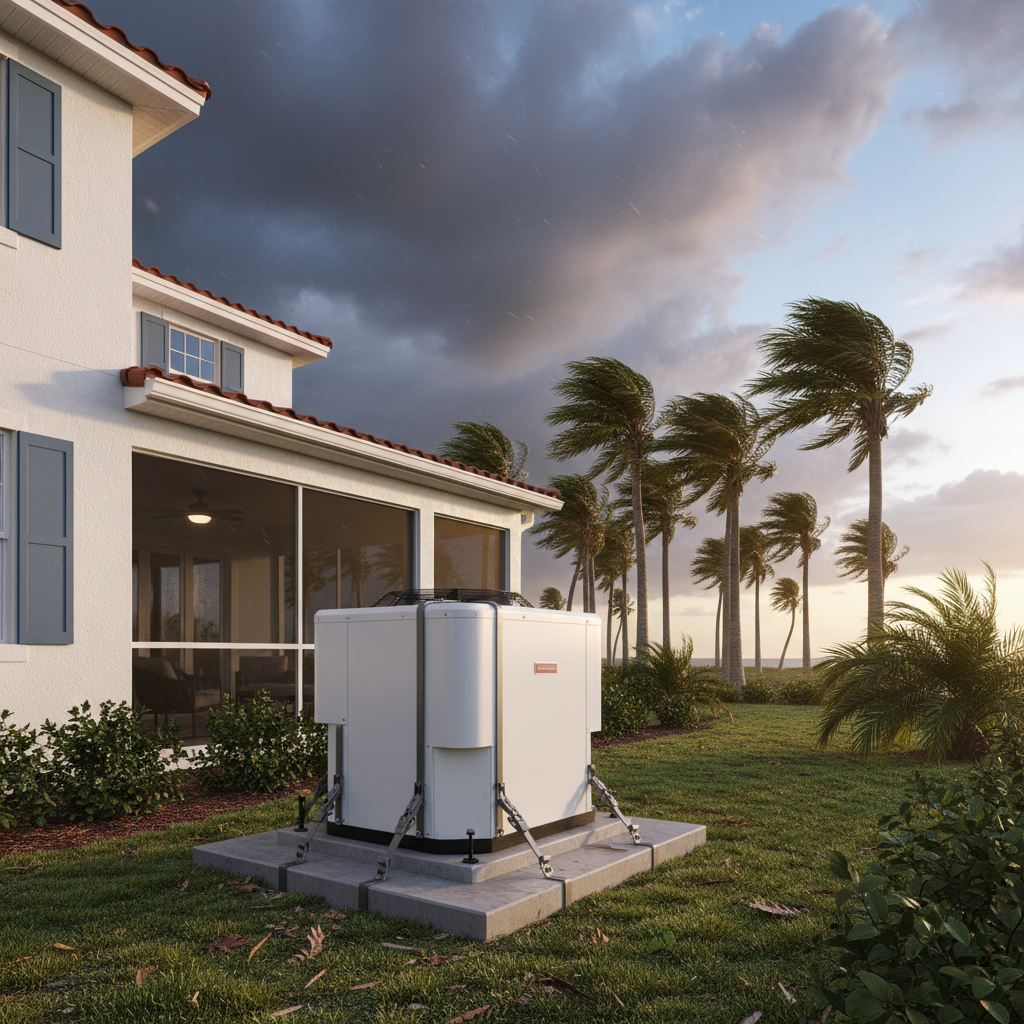
Florida Building Code requires hurricane tie-downs on outdoor HVAC equipment in coastal counties. Look for metal straps anchored from the unit to the concrete pad or to deeply set ground anchors. If straps are rusted, missing, or loose, call an HVAC contractor to replace them before storm season. The pad itself should be level and intact, with no major cracks or settling that could let the unit shift in high winds.
Step 6: Replace the Air Filter and Stock a Spare
Estimated time: 5 minutes
A clogged filter forces your system to work harder and gives debris an easier path to your evaporator coil. Install a fresh pleated filter at the start of June and keep one spare on hand. After a storm, dust and construction debris in the air can clog filters within days, so being able to swap one quickly matters.
Hurricane HVAC Preparation in Florida: Securing the Condenser (Steps 7-10)
These four steps focus on the final 24 to 48 hours before a storm makes landfall. By this point, your earlier prep is already done.
Step 7: Verify Hurricane Straps Meet Current Florida Building Code
Florida Building Code Section 1620 covers wind load requirements for mechanical equipment. In Pinellas County, outdoor condensers must be anchored to resist the wind speeds defined for our zone. If your unit was installed before 2002 or you are not sure when the tie-downs were last inspected, have a licensed HVAC contractor verify the connections. New code-compliant tie-down kits typically install in under an hour.
Step 8: Decide Whether to Cover the Unit (and When)
This is where homeowners get conflicting advice, so here is the manufacturer-aligned answer:
| Timing | Cover the Unit? | Reason |
|---|---|---|
| Days before the storm | No | The unit needs airflow to keep running until shutdown |
| Hour before landfall (after AC is shut off) | Optional, breathable mesh only | Reduces debris ingress, allows ventilation |
| During the storm | No new action | Whatever was on stays; do not go outside |
| After the storm clears | Yes, breathable mesh | Protects from settling debris until you restart |
Never use a plastic tarp or solid vinyl cover. Sealed covers trap moisture against the coil, accelerate corrosion in salt air, and pose a fire hazard if the unit accidentally runs.
Step 9: Shut Off the AC at the Breaker Before Landfall
When wind speeds start climbing or the utility issues a notice of unstable power, shut your AC off at the dedicated breaker in your main panel, not just at the thermostat. Powering down at the breaker disconnects the compressor and indoor air handler from any incoming surges. Leaving the system on a thermostat shutoff still leaves the compressor connected to the grid, which is exactly what you do not want during a storm.
Step 10: Move Outdoor Objects That Could Become Projectiles
Walk your property one last time. Anything not bolted down, including patio furniture, grills, planters, kids' toys, garden hoses, decorative rocks, becomes a potential missile in a Category 2 or higher hurricane. Items that hit your condenser at 100 mph can crack the fan blade, dent the cabinet, or puncture the refrigerant lineset. Bring everything inside or into a garage.
During the Storm: What to Do With Your AC When the Hurricane Hits
Once landfall begins, your hurricane HVAC preparation is essentially complete. Your job during the storm is to leave the system off and stay safe inside. A few things to know:
Do not run the AC during the storm. Even if you still have power, voltage fluctuates wildly during hurricanes. Running a compressor on dirty power is one of the fastest ways to fry it. Indoor temperatures will rise, but your home's insulation buys you several hours of comfortable conditions.
Unplug smart thermostats and surge-sensitive HVAC accessories. A whole-home surge protector handles most threats, but a direct lightning strike can still get through. Smart thermostats, ductless mini-split heads with electronics, and zoning controllers benefit from being physically unplugged or switched off at the breaker.
If power flickers, leave the breaker off. Repeated on/off cycles damage compressors. Once you have shut the system down for the storm, leave it down until power has been stable for at least 30 minutes after the storm passes.
Open interior doors to circulate air. With the AC off, opening doors between rooms lets cooler air from interior spaces mix with warmer rooms. It will not stop the temperature from rising, but it slows the climb.
After the Storm: Inspecting and Restarting Your HVAC System Safely
This is the part most homeowners get wrong. Resist the urge to flip the breaker the moment the storm passes. Follow this restart sequence in order:
- Wait for utility-confirmed stable power. Once your power returns, leave the AC breaker off for at least 30 minutes. Watch for flickers or repeat outages, which are common as crews repair the grid.
- Visually inspect the outdoor condenser. Look for displaced panels, bent fins, debris in the fan, fan blade damage, kinked refrigerant lines, or pooled water around the base.
- Check for flooding. If the condenser pad was submerged, do not turn the unit on. Salt water and floodwater corrode electrical components inside the contactor and capacitor compartment, and restarting a flooded unit can cause an electrical fire. This is non-negotiable.
- Look for projectile damage. Even small dents in the cabinet can mean internal damage to the coil. If you see anything beyond minor cosmetic scratches, schedule an inspection before restart.
- Remove any cover and clear surface debris. Use a soft brush or your garden hose on a gentle setting to rinse leaves, sand, and salt residue from the fins.
- Power on at the breaker, then at the thermostat. Set the thermostat 4 to 5 degrees below the indoor temperature and listen for normal operation: a steady hum from the condenser, cool air from the supply registers within 5 to 10 minutes.
- Listen for abnormal sounds. Grinding, screeching, repeated clicking, or a unit that hums but will not start usually indicates a damaged compressor or capacitor. Shut it back off and call a technician.
If your AC trips the breaker on restart, do not keep flipping it. A tripped breaker after a storm almost always means a short, a damaged contactor, or moisture in the electrical compartment, and continued attempts will damage the system further. For full troubleshooting on a unit that runs but does not cool, see our guide on why your AC is not blowing cold air.
AC damaged or not restarting after the storm? We can help today.
Killian's Air Conditioning - Licensed & Insured (FL CAC1823158) - 24/7 Emergency Service
Call (727) 591-4776Hurricane HVAC Preparation Florida Cost Breakdown and Insurance Tips
Most homeowners are surprised by how affordable the prep side of the equation is compared to a post-storm replacement. Here is a realistic cost comparison for hurricane HVAC preparation in Florida, based on typical Pinellas County pricing:
| Action | Typical Cost | Frequency | What It Prevents |
|---|---|---|---|
| Pre-season tune-up | $99 to $199 | Annually | Compressor failure under stress |
| Whole-home surge protector | $300 to $700 installed | One time | Surge damage from lightning and grid spikes |
| Unit-mounted AC surge protector | $200 to $400 installed | One time | Direct hits to compressor and electronics |
| New hurricane tie-down kit | $150 to $300 | One time (lasts decades) | Unit displacement in high winds |
| Breathable mesh post-storm cover | $30 to $80 | Reusable | Debris ingress after storm |
| Compressor replacement | $1,500 to $2,800 | After surge or restart damage | n/a (this is what you are avoiding) |
| Full system replacement | $5,000 to $10,000+ | After flood or projectile damage | n/a (this is what you are avoiding) |
The math is simple. A few hundred dollars in prep prevents thousands in replacement costs. If your system is more than 10 years old and you are weighing whether to invest in prep, our guide on when to replace your AC unit in Florida can help you decide if a replacement before the season is the better play.
Insurance documentation tips:
- Standard Florida homeowners insurance covers wind damage to outdoor HVAC equipment, including projectile and direct wind damage. Flood damage is excluded under most policies and requires separate flood insurance through the National Flood Insurance Program (NFIP) or a private flood policy.
- Photo documentation taken before each season speeds claims dramatically. Keep dated photos of your condenser, indoor air handler, and any visible serial numbers.
- After damage, do not discard any parts before the adjuster has photographed them, even if the unit is clearly destroyed.
- Get a written inspection report from a licensed HVAC contractor (look for a Florida CAC license number on any quote).
For homeowners weighing a full replacement after storm damage, the AC installation checklist covers what to ask any contractor before signing.
Frequently Asked Questions About Hurricane HVAC Preparation
Should I cover my AC during a hurricane in Florida?
Most manufacturers recommend NOT covering the unit during the storm itself. A wrapped condenser can trap moisture against electrical components and creates a fire hazard if the unit accidentally runs while covered. The exception is a breathable mesh cover applied AFTER the storm passes to keep settling debris out until you restart. Avoid plastic tarps and sealed vinyl covers entirely in our coastal climate. They trap salt-laden moisture against the coil and accelerate corrosion.
Should I turn off my AC during a hurricane?
Yes, absolutely. Shut your AC off at the dedicated breaker in your main panel before the storm makes landfall, ideally as soon as your utility issues unstable-power notices. Turning the AC off only at the thermostat still leaves the compressor connected to grid voltage, which is exactly what causes the surge damage you are trying to prevent. Leave the breaker off until power has been stable for at least 30 minutes after the storm passes.
How do I prepare my HVAC for hurricane season in Pinellas County?
Start with a pre-season tune-up scheduled in April or May, install a surge protector if you do not already have one, verify your hurricane tie-downs are intact and code-compliant, photograph the unit for insurance, and replace the air filter at the start of June. Closer to a storm, clear debris and vegetation around the condenser, secure or stow any nearby loose objects, and shut the AC off at the breaker before landfall. The full procedure is the 10-step checklist above.
What if my AC unit floods during a hurricane?
Do not turn it on. A flooded unit, whether from storm surge or freshwater flooding, has water inside the electrical compartment that contains the contactor, capacitor, and wiring connections. Restarting a flooded condenser can cause an electrical fire and is one of the most common preventable post-storm losses we see. Call a licensed HVAC technician for a flood inspection. Many flooded units can be salvaged with electrical component replacement and a thorough cleaning, but only after proper assessment.
Will homeowners insurance cover hurricane HVAC damage in Florida?
Wind damage to outdoor HVAC equipment is typically covered under standard Florida homeowners insurance policies. This includes damage from flying debris, fallen trees, and direct wind force. Flood damage, including storm surge, is excluded from standard policies and requires separate flood insurance through NFIP or a private carrier. Your deductible may be a percentage of your home's insured value rather than a flat amount during a named storm, so check your policy's hurricane deductible before filing a small claim. Documentation, especially pre-season photos and a recent maintenance record, makes claims process faster.
How long can my AC sit without power after a hurricane?
The condenser and air handler themselves are fine sitting unpowered for days or even weeks. The bigger problem is indoor humidity, which can climb past 70% within 24 hours of an AC outage in Florida summer conditions, encouraging mold growth and damaging wood furniture and electronics. If outside air is dry after the storm passes, opening windows briefly can help. When power returns, run a portable dehumidifier (or get the AC back online if safe) as soon as possible. If your home was without power for more than 48 hours, monitor for signs of mold in closets, behind furniture, and in attic spaces over the next two weeks.
Do I need a permit for hurricane HVAC tie-downs in Pinellas County?
For new HVAC equipment installs, the contractor pulls the permit and the tie-down installation is part of the work. For retrofitting tie-downs on an existing unit, requirements vary by municipality within Pinellas County. A licensed HVAC contractor will know the local code for your address, including St. Petersburg, Clearwater, Largo, and the smaller Gulf beach municipalities. Always work with a contractor holding a Florida CAC license, which means they are licensed by the Department of Business and Professional Regulation to perform mechanical work statewide.
Take the Stress Out of Hurricane HVAC Prep in St. Petersburg
You do not have to handle hurricane HVAC preparation alone. Killian's Air has been preparing AC systems for hurricane season across Pinellas County for years, and our pre-season tune-up bookings open every February. We are EPA certified, NATE certified, family-owned, and licensed Florida HVAC contractors (CAC1823158). Most importantly, we are local. We do not pack up and leave when a storm is forecast, we are here to take emergency calls 24/7 the moment power and roads are restored.
If you have not done your prep yet this year, you still have time before the June 1 start of hurricane season. Schedule a tune-up, get your surge protector quoted, and have us verify your tie-downs in a single visit. After a storm, our emergency line is staffed around the clock for system inspections and restarts.
Call Killian's Air at (727) 591-4776 to book your pre-hurricane tune-up or schedule emergency post-storm service. Same-day appointments available throughout St. Petersburg, Clearwater, Largo, Pinellas Park, Dunedin, Palm Harbor, and the rest of Pinellas County. Florida License CAC1823158.